Excavation vs. Preservation. When Is It Better Not to Dig?
Archaeology is often associated with excavation, yet digging is not always the most responsible or effective way to study the past. In many cases, leaving a site undisturbed can better protect cultural heritage, safeguard contextual information, and allow future generations to investigate with improved technologies and ethical frameworks.
Excavation is Destruction
Excavation is ultimately a destructive act, even when done carefully, although archaeologists often attempt to minimize or organize the destruction. Excavation is irreversible and once a site is excavated, it cannot be re-excavated in the same context. Stratigraphy (layers of dirt), soil composition/coloration, positions of artifacts, spatial patterns, etc. hold valuable information that is irrecoverable post-excavation. The process of excavation can also displace dirt and disrupt life for people, animals, or plants living on-site, therefore it is important for archaeologists to carefully evaluate when excavation should occur. There is often the misconception that archaeologists sole purpose is to excavate, and they will do so whenever possible. Yet in many situations, archaeologists will only excavate when a site is in direct danger due to construction or other disasters in order to ensure cultural materials and their contexts are preserved.
Excavation of 2,000 year-old Roman military settlement in the city center of Strasbourg, France. Image Source.
Conscientious amateur archaeologists, like passersbys or farmers who happen to see artifacts, are crucial to archaeology as they often are the first to collect surface artifacts, document finds, and report them to nearby archaeologists. However, amateur archaeologists can also put sites at risk when they excavate without the proper tools, training, or documentation, emphasizing the importance of experienced archaeologists to be able to survey and make decisions about sites after they are reported to truly receive the full depth of information from a site.
Reasons Not to Dig
Lack of Artifacts:
Archaeologists will often stop digging when they reach “sterile” soil, meaning a layer with little or no evidence of human activity. Continuing beyond this point risks wasting limited resources and unnecessarily disturbing intact stratigraphy. Careful assessment of artifact density and soil context helps archaeologists determine when further excavation is unlikely to yield meaningful data. Although sterile soil can be useful in some cases to signal transitions between cultural layers or middens, importantly, it can also act as an signal for archaeologists to halt excavation after confirmation by digging another 10-20 cms. This practice is emphasized with access to technology like remote sensing and non-invasive surveying, where archaeologists choose not to excavate when they can gain sufficient information without digging.
Sterile soil in the context of stratigraphy can help signal important transitions between civilizations and eras. Image Source.
Future Technology:
Archaeologists may also choose not to excavate if better technology could produce a greater volume of valuable information later. For example, in recent years, non-invasive methods such as ground-penetrating radar (GPR), magnetometry, and LiDAR have allowed researchers to identify subsurface features without disturbing them. LiDAR surveys have revealed previously unknown, expansive structures beneath forest canopies in places like Caracol. Because excavation permanently alters a site, many professionals advocate leaving portions untouched so future researchers with improved analytical techniques or technology such as advanced DNA testing or residue analysis can study them more effectively.
LiDAR scan of Caracol’s ancient Mayan agricultural terraces and city architecture underneath dense jungle canopy. Image Source.For instance, at the site of Ness of Brodgar in Orkney, Scotland known to contain an extensive stone complex of structures from the Neolithic era, excavation began in 2009 and continued until 2024. However, as archaeologists continued excavation, parts of the quarried stonework began to crumble when left open to the air. Eventually, the excavation team made the decision to infill (refilled excavation site with dirt) much of the site and added protective layers after documenting exposed areas in August of 2024 in hopes of preserving fragile features that could be studied more extensively with future technology or methods not yet available. The team recognized that once a site was excavated or potentially damaged, it could never be re-excavated the same way and they could lose valuable information that future technologies could extract without as much damage. Work at the site is expected to resume later this year when new surveys and data can inform targeted excavation.
Excavation of the Ness of Brodgar site. Image Source.
Archaeological sites are often culturally and spiritually significant to descendant communities. Excavation without consultation can cause harm or violate cultural values, particularly when burial grounds or sacred spaces are involved. Today, many archaeologists work in collaboration with Indigenous groups and follow professional ethical guidelines established by organizations such as the Society for American Archaeology. In some cases, communities may prefer preservation over excavation, in which case archaeologists must respect their decision and cease excavation if necessary.
A highly controversial case highlighting conflict between archaeologists and Native American tribes began in 1996 with the discovery of Kennewick Man in Washington State. After the remains were uncovered, the Umatilla, Colville, Yakama, and Nez Perce tribes asserted that the individual was their ancestor and requested that scientific study stop so he could be reburied according to their traditions. Although the remains were found on ancestral Umatilla land, some archaeologists argued that the skeleton’s great age made cultural affiliation uncertain and that it held significant scientific value. In 2015, DNA testing showed that he was “more closely related to modern Native Americans than any other living population,” strengthening tribal claims. In 2017, after a prolonged legal and ethical debate, the remains were returned and reburied by a coalition of tribes under the Native American Graves Protection and Repatriation Act (NAGPRA).
The skeleton of the Kennewick Man while housed in the Burke Museum. Image Source.
Environmental and Climate Risk:
Environmental instability can also make excavation unwise. Sites threatened by erosion, rising sea levels, or extreme weather may require stabilization rather than immediate excavation. Climate change has accelerated site loss in coastal and Arctic regions, where thawing permafrost exposes and damages fragile materials. Organizations such as UNESCO have emphasized that preservation planning must account for environmental risk and sustainability. In certain cases, monitoring and protective measures may provide better long-term outcomes than excavation, especially when resources are limited.
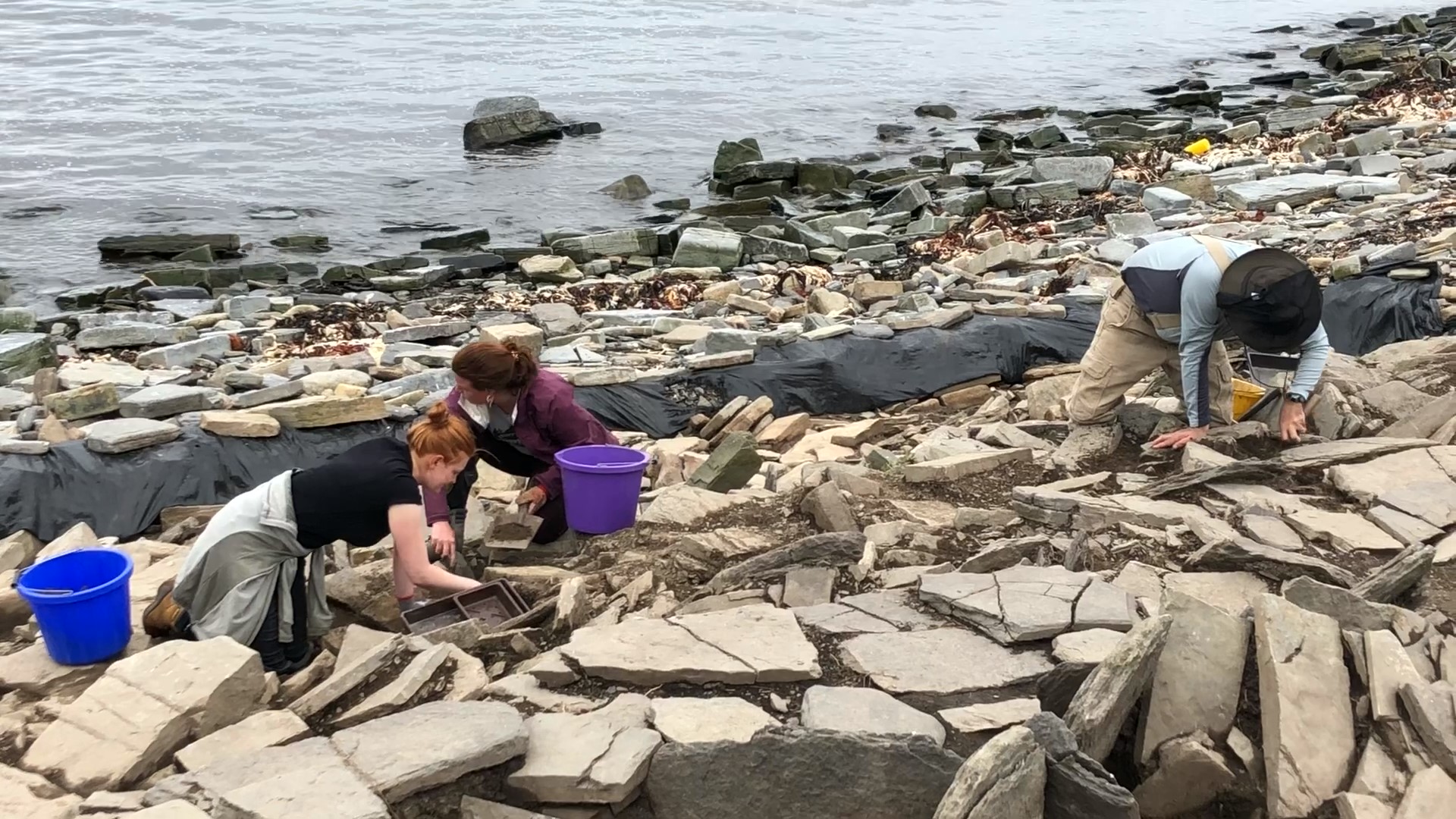
On the coast of the Orkney Islands. climate change is threatening archaeological preservation on the prehistoric settlement site Knowe of Swandro. The site lies directly on a boulder beach, meaning rising sea levels and more frequent, intense storms linked with climate change cause rapid erosion, destroying structural remains and cultural deposits. Archaeologists have focused excavation on only the most endangered areas while planning ongoing monitoring and protective measures, recognizing that unrestrained digging would expose fragile deposits to further erosion and loss but they also must attempt to preserve what they can.
Archaeologists race against time to excavate the 5000-year-old Neolithic chambered tomb of Knowe of Swandro before it is destroyed by the sea. Image Source.
When Excavation is Necessary
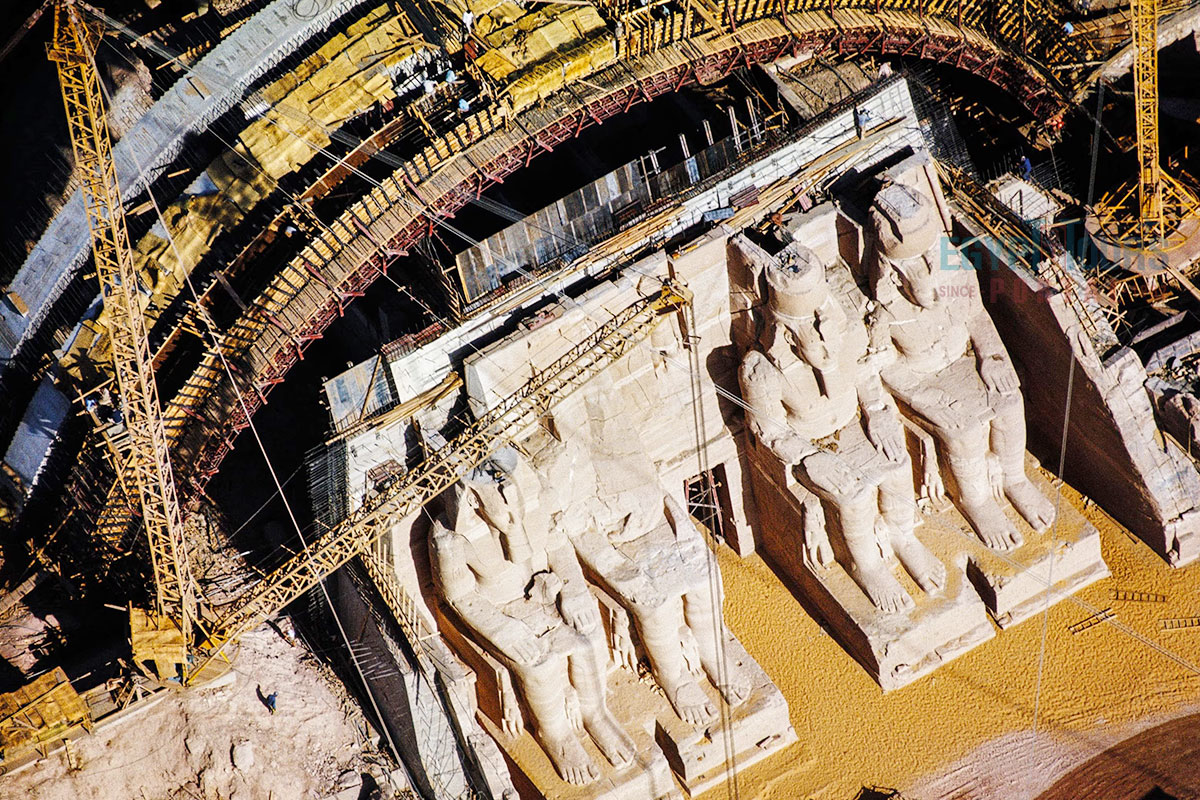
Although preservation is often preferred, there are situations where excavation becomes unavoidable. Salvage or rescue archaeology is often conducted when a site faces immediate destruction from threats such as construction, looting, or natural disaster. For example, during the construction of the Aswan High Dam in Egypt, rising waters from the Nile risked permanently submerging ancient monuments like the Abu Simbel. An international campaign led by UNESCO relocated the temples block by block to higher ground. In cases like this, excavation and documentation are not optional, but they are the only way to preserve historical information before it is lost forever.
Egypt’s Abu Simbel Temples carefully cut piece by piece, moved, and relocated as part of the 1960s UNESCO project. Image Source.
Excavation may also be necessary when human remains or artifacts are discovered accidentally, such as during road construction or housing development. Cultural resource management (CRM) archaeologists are often required by law to assess and recover materials before projects continue. While excavation permanently alters a site, careful documentation ensures that the information it contains is recorded and studied rather than destroyed without record. In these urgent situations, excavation becomes a form of preservation through documentation.
The Gray Area
Between excavation and preservation lies a difficult middle ground. Some sites face gradual environmental threats rather than immediate destruction, forcing archaeologists to carefully decide whether to dig now or wait for improved technology and funding. Arctic sites, for example, are being exposed by thawing permafrost, but excavation can accelerate deterioration once frozen materials are removed from stable conditions. Archaeologists must weigh whether immediate recovery outweighs the potential for better future methods of analysis.
The gray area also includes ethical considerations. A site may hold scientific value, but descendant communities may prefer non-invasive study or preservation. In such cases, archaeologists must balance research goals with cultural respect, legal frameworks, and sustainability. These decisions rarely have simple answers; instead, they require collaboration, risk assessment, and careful evaluation of long-term consequences.
Works Cited
Archaeological Ethics – Process of Archaeology | UW-La Crosse. (n.d.). UW-La Crosse. Retrieved February 24, 2026, from https://www.uwlax.edu/mvac/process-of-archaeology/fieldwork/archaeological-ethics/
Renfrew, C., & Bahn, P. G. (2016). Archaeology theories, methods, and practice (Seventh edition, revised and updated.). Thames & Hudson, Limited. Retrieved February 24, 2026, from https://ebookcentral.proquest.com/lib/ed/detail.action?docID=5906397
Native American Heritage Commission. (n.d.). Archaeological terms glossary. Retrieved February 24, 2026, from https://nahc.ca.gov/resources/archaelogical-terms-glossary/
Principles of Archaeological Ethics. (n.d.). Retrieved February 24, 2026, from https://saa.org/Member/SAAMember/Career-and-Practice/Principles-of-Archaeological-Ethics.aspx
UNESCO World Heritage Centre. (n.d.). Climate change and world heritage. Retrieved February 24, 2026, from https://whc.unesco.org/en/climatechange/
Siegfried, E. (2017, September). How does an archaeologist know when to stop digging? « Royal Saskatchewan Museum. Royal Saskatchewan Museum. Retrieved February 24, 2026, from https://royalsaskmuseum.ca/discover/rsm-more/how-does-an-archaeologist-know-when-to-stop-digging
Wikipedia contributors. (2026, February 18). Ness of Brodgar. In Wikipedia. Retrieved February 24, 2026, from https://en.wikipedia.org/wiki/Ness_of_Brodgar
College Sidekick. (n.d.). Native American Graves Protection and Repatriation Act. Retrieved February 24, 2026, from https://www.collegesidekick.com/study-guides/culturalanthropology/native-american-graves-protection-and-repatriation-act
Wikipedia contributors. (2025, December 16). Knowe of Swandro. Wikipedia. Retrieved February 24, 2026, from https://en.wikipedia.org/wiki/Knowe_of_Swandro
Wills, M. (2025). An Epic Face-Lift: Moving Abu Simbel out of the Nile. JSTOR Daily. Retrieved February 24, 2026, from https://daily.jstor.org/an-epic-face-lift-moving-abu-simbel-out-of-the-nile/
Markham, A. (2018, June 29). Rapid Warming is Creating a Crisis for Arctic Archaeology. The Equation. Retrieved February 24, 2026, from https://blog.ucs.org/adam-markham/rapid-warming-is-creating-a-crisis-for-arctic-archaeology/



![[image]](https://archive.archaeology.org/1007/etc/images/caracol1.jpg)